
Early humans may have collected stones as keepsakes 500,000 years ago
Researchers suggest that early humans collected colorful stones, fossils, and ancient tools as personal keepsakes, potentially shaping the evolution of memory and identity.
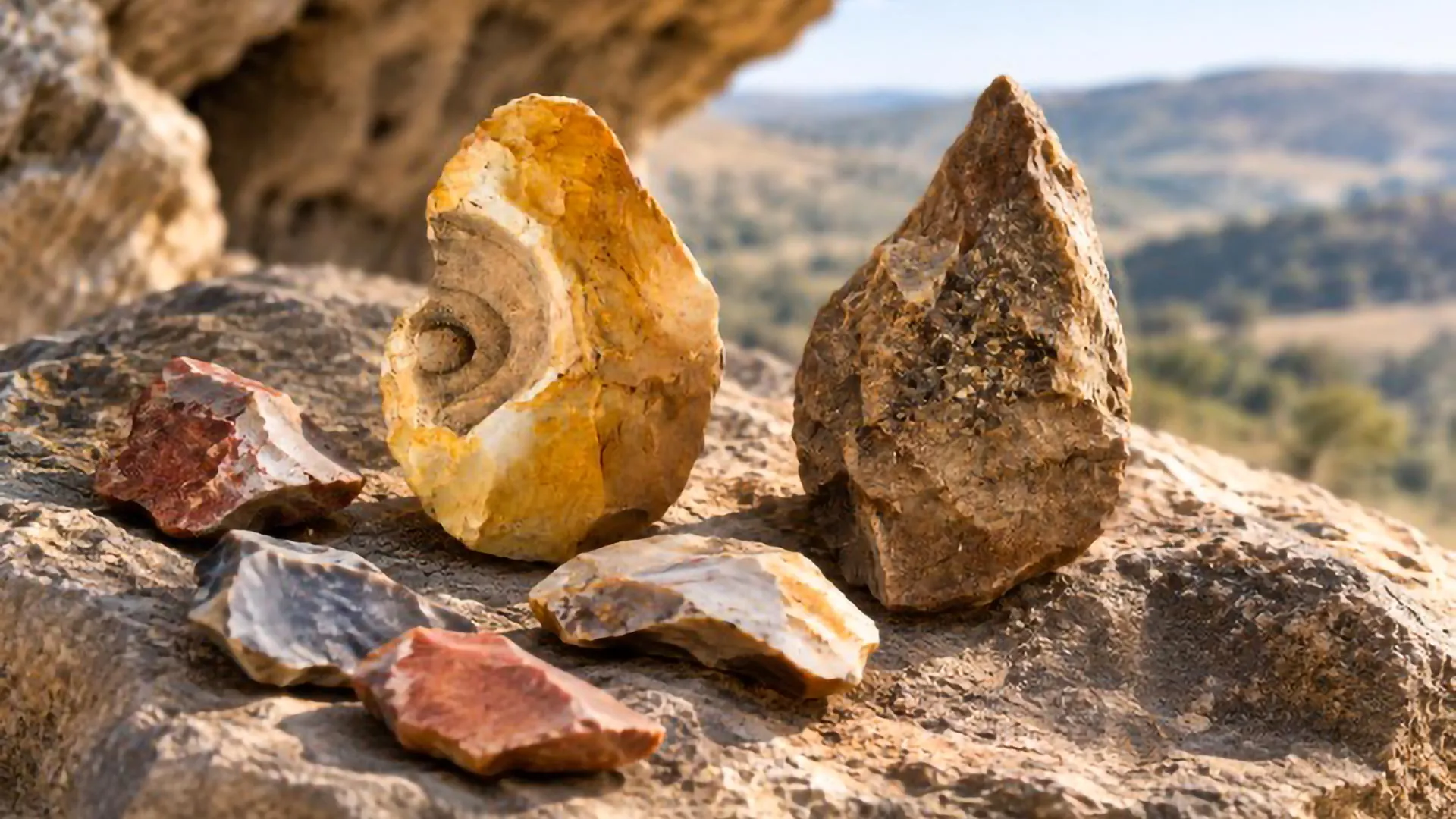
Scientists propose that early humans may have collected unusual stones, fossils, and ancient tools as personal keepsakes as far back as 500,000 years ago. This behavior, according to researchers, could have played a role in the evolution of human memory, social relationships, and the sense of identity.
Evidence from archaeological sites in Israel suggests that early humans gathered and retained objects that served no apparent practical purpose. These items, such as colorful pebbles brought from different locations or flint tools intentionally shaped to preserve fossils or distinctive geological features, may have held personal significance.
Researchers theorize that these objects acted as tangible reminders of past experiences or places. The act of collecting an item from a specific location could have provided a physical cue for recalling personal memories, potentially influencing cognitive development.
Source: Currents API (free key)